1. What is the difference between plastic surgery and cosmetic surgery?
Plastic surgery focuses on restoring function and appearance after injury, birth defects, or disease, while cosmetic surgery is performed to enhance appearance and improve aesthetic features.
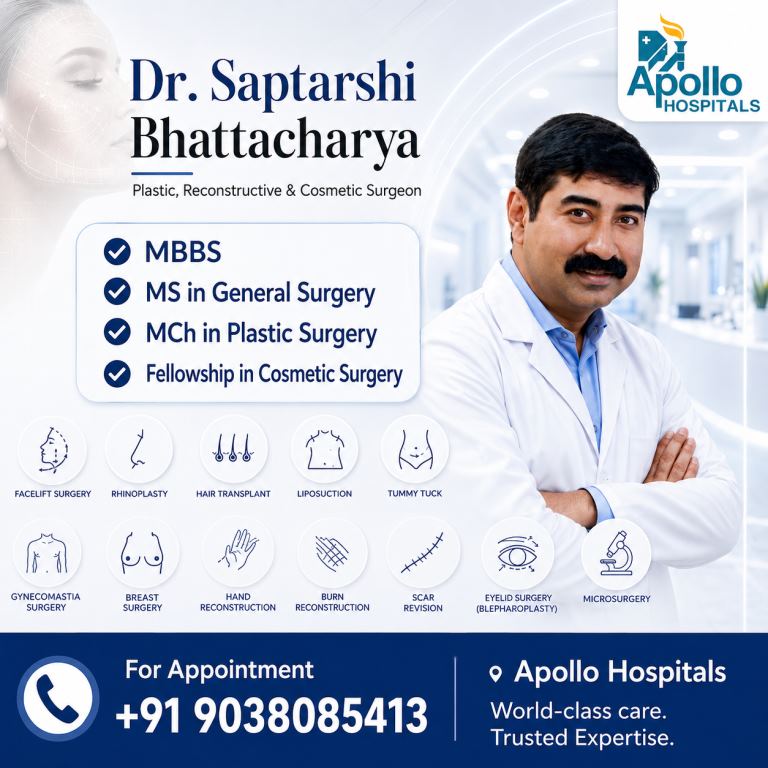
2. Who is a Plastic, Reconstructive, and Cosmetic Surgeon?
A Plastic, Reconstructive, and Cosmetic Surgeon is a specialist trained to perform surgeries that restore form and function as well as improve physical appearance.
3. What conditions does a plastic surgeon treat?
Plastic surgeons treat congenital deformities, traumatic injuries, burns, scars, hand injuries, skin tumors, facial fractures, and perform cosmetic enhancement procedures.
4. What cosmetic procedures are commonly performed?
Common cosmetic procedures include rhinoplasty (nose reshaping), liposuction, tummy tuck, facelift, eyelid surgery, breast augmentation, breast reduction, gynecomastia surgery, and lip enhancement.
5. What is reconstructive surgery?
Reconstructive surgery restores the appearance and function of body parts affected by trauma, burns, cancer surgery, infections, or congenital abnormalities.
6. Am I a good candidate for cosmetic surgery?
You may be a suitable candidate if you are in good overall health, have realistic expectations, and wish to improve a specific physical feature.
7. Is plastic surgery safe?
Plastic surgery is generally safe when performed by a qualified and experienced plastic surgeon in an accredited hospital or surgical facility.
8. How long does it take to recover after surgery?
Recovery depends on the procedure. Minor procedures may require only a few days, while major surgeries may take several weeks to months for complete healing.
9. Will there be visible scars after surgery?
Most surgical procedures leave scars, but plastic surgeons place incisions carefully and use advanced techniques to minimize their visibility over time.
10. How should I prepare for plastic surgery?
Preparation may include medical evaluation, laboratory tests, stopping smoking, avoiding certain medications, and following your surgeon’s pre-operative instructions.
11. Are the results of cosmetic surgery permanent?
Many cosmetic procedures provide long-lasting results, although aging, lifestyle, weight changes, and pregnancy can affect the outcome over time.
12. What is rhinoplasty?
Rhinoplasty is a surgical procedure that reshapes the nose to improve facial balance, appearance, or breathing function.
13. What is liposuction?
Liposuction is a body contouring procedure that removes stubborn fat deposits from areas such as the abdomen, thighs, arms, hips, and chin.
14. What is gynecomastia surgery?
Gynecomastia surgery removes excess breast tissue and fat in men to create a flatter, firmer, and more masculine chest.
15. Can plastic surgery correct scars and burn injuries?
Yes. Plastic and reconstructive surgery can significantly improve the appearance and function of scars, burn contractures, and traumatic injuries.
16. What is hand surgery?
Hand surgery treats injuries, fractures, tendon injuries, nerve injuries, congenital hand deformities, carpal tunnel syndrome, and other conditions affecting hand function.
17. Does insurance cover plastic surgery?
Insurance may cover reconstructive procedures that are medically necessary, while cosmetic surgeries performed solely for aesthetic reasons are generally not covered.
18. How soon can I return to work after surgery?
The return-to-work timeline varies depending on the procedure and your occupation. Some patients resume desk work within a week, while others may require several weeks.
19. What happens during the first consultation?
During your consultation, the surgeon reviews your medical history, examines the treatment area, discusses your goals, explains available options, and develops a personalized treatment plan.
20. Why should I choose an experienced plastic surgeon?
An experienced plastic surgeon offers advanced surgical expertise, prioritizes patient safety, provides individualized treatment plans, and strives to achieve natural-looking, long-lasting results.